
Warning signs
Unofficial translation by pdc.ro from Romanian. The text that applies is the Romanian one. pdc.ro is not affiliated with the DGPCI or the Ministry of Internal Affairs. Page in Romanian
Warning signs alert you to a danger. They are placed before it: at most 50 m before it in built-up areas, between 100 m and 250 m outside built-up areas and between 500 m and 1,000 m on motorways and expressways. If the danger is further away, there is a panel showing the distance below the sign (Article 66(4) of the Regulation approved by Government Decision (HG) no. 1.391/2006, referred to below as the ‘Regulation’). References to OUG no. 195/2002 are to Government Emergency Ordinance no. 195/2002 on traffic on public roads.
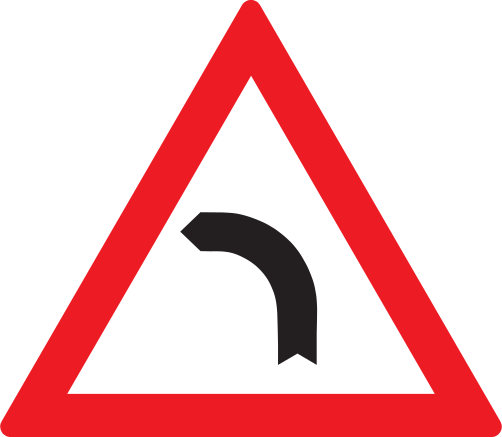
Bend to the left
Warns of a bend to the left. You reduce speed before the bend. If visibility is below 50 m, you must not overtake, stop, stand, make a U-turn or reverse (Article 120(1) letter c), Article 126 letter a), Article 128(1) letter a), Article 142 letter d) and Article 143 letter a) of the Regulation).
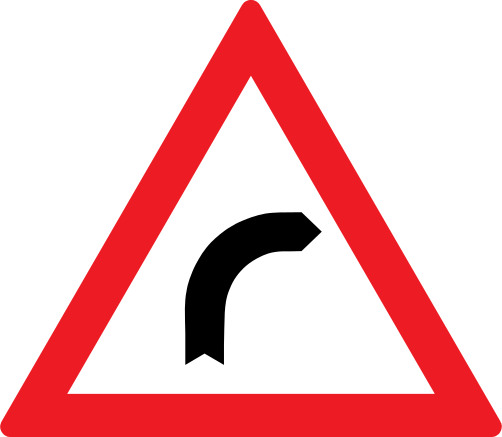
Bend to the right
Warns of a bend to the right. You reduce speed before the bend. If visibility is below 50 m, you must not overtake, stop, stand, make a U-turn or reverse (Article 120(1) letter c), Article 126 letter a), Article 128(1) letter a), Article 142 letter d) and Article 143 letter a) of the Regulation).
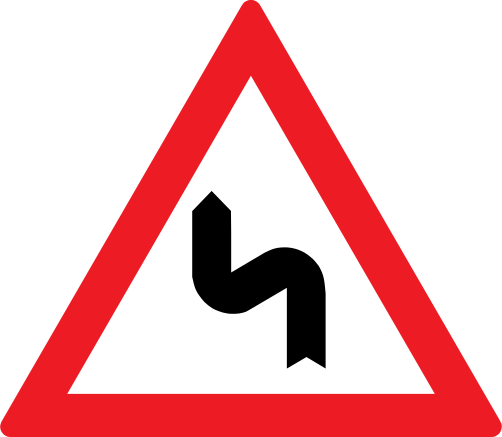
Double bend or series of bends, first to the left
Warns of a series of bends, the first to the left. It may be accompanied by an additional panel showing the length of the dangerous section. You reduce speed before the first bend. If visibility is below 50 m, you must not overtake, stop, stand, make a U-turn or reverse (Article 120(1) letter c), Article 126 letter a), Article 128(1) letter a), Article 142 letter d) and Article 143 letter a) of the Regulation).
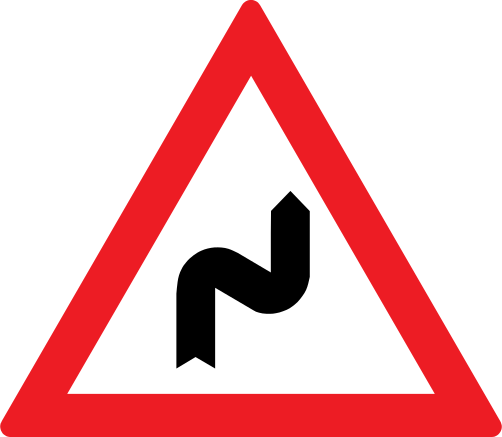
Double bend or series of bends, first to the right
Warns of a series of bends, the first to the right. It may be accompanied by an additional panel showing the length of the dangerous section. You reduce speed before the first bend. If visibility is below 50 m, you must not overtake, stop, stand, make a U-turn or reverse (Article 120(1) letter c), Article 126 letter a), Article 128(1) letter a), Article 142 letter d) and Article 143 letter a) of the Regulation).

Particularly dangerous bend
Marks a particularly dangerous bend; the arrows show the direction of the bend. You drive at no more than 30 km/h in built-up areas and 50 km/h outside them (Article 123 letter b) of the Regulation). If visibility is below 50 m, you must not overtake, stop, stand, make a U-turn or reverse (Article 120(1) letter c), Article 126 letter a), Article 128(1) letter a), Article 142 letter d) and Article 143 letter a) of the Regulation).

Successive panels for particularly dangerous bends
Panels placed on the outside of a dangerous bend. The tips of the arrows show the direction of the bend.
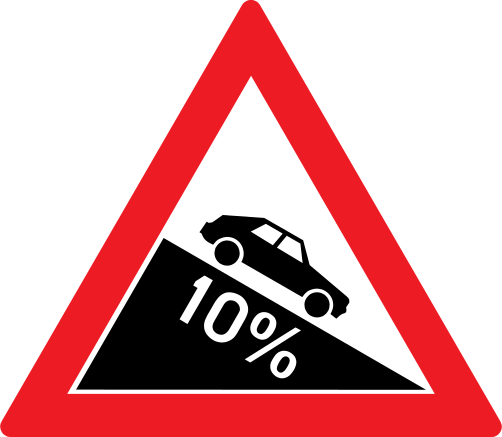
Dangerous descent
Warns of a steep downhill gradient. You must not stand on the slope (Article 143 letter e) of the Regulation). If the road is narrow and there is a fixed obstacle on the side of the vehicle going uphill, you, going downhill, give way to it (Article 135 letter e) of the Regulation).
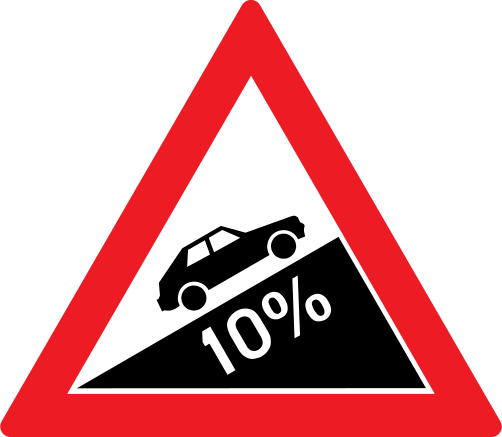
Steep ascent
Warns of a steep uphill gradient. You must not stand on the slope (Article 143 letter e) of the Regulation). Near the top of the hill, if visibility is below 50 m, you must not overtake (Article 120(1) letter b) of the Regulation). On a narrow road, if two vehicles of the same category cannot pass each other, the one going uphill normally reverses (Article 127(2) of the Regulation).
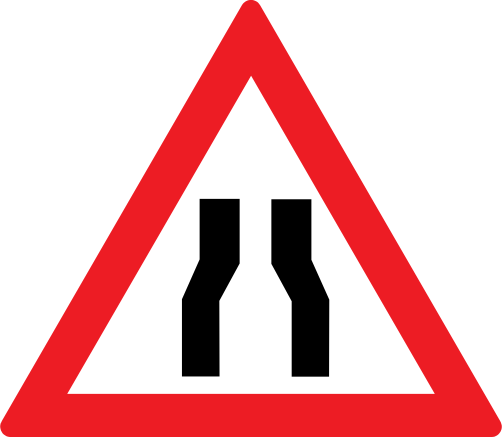
Road narrows on both sides
Warns that the road narrows on both sides. You reduce speed. On the signed section you must not stop, and therefore you must not stand, make a U-turn or reverse either (Article 126 letter a), Article 128(1) letter a), Article 142 letter j) and Article 143 letter a) of the Regulation). It may be accompanied by the priority signs for a narrow section.
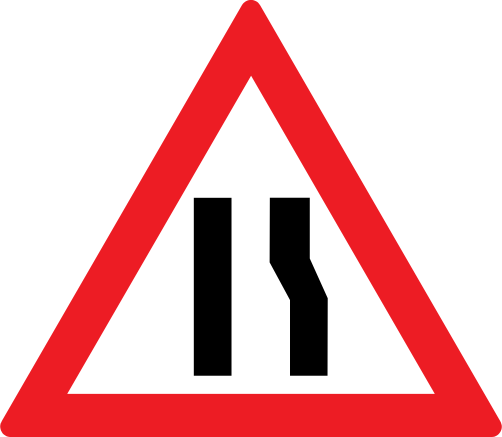
Road narrows on the right
Warns that the road narrows on the right. You reduce speed. On the signed section you must not stop, and therefore you must not stand, make a U-turn or reverse either (Article 126 letter a), Article 128(1) letter a), Article 142 letter j) and Article 143 letter a) of the Regulation). It may be accompanied by the priority signs for a narrow section.
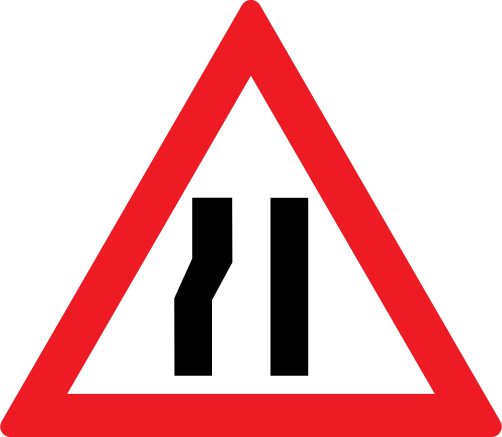
Road narrows on the left
Warns that the road narrows on the left. You reduce speed. On the signed section you must not stop, and therefore you must not stand, make a U-turn or reverse either (Article 126 letter a), Article 128(1) letter a), Article 142 letter j) and Article 143 letter a) of the Regulation). It may be accompanied by the priority signs for a narrow section.
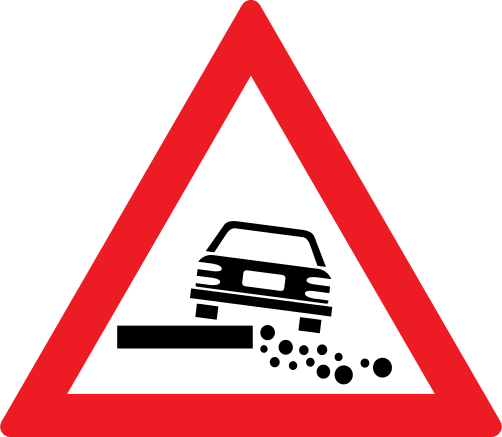
Dangerous verge
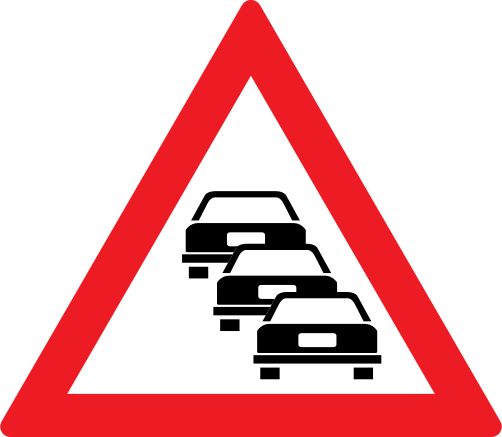
Congested road
Warns of a road with heavy traffic. You keep a sufficient distance from the vehicle in front to avoid a collision (Article 51 of OUG no. 195/2002).
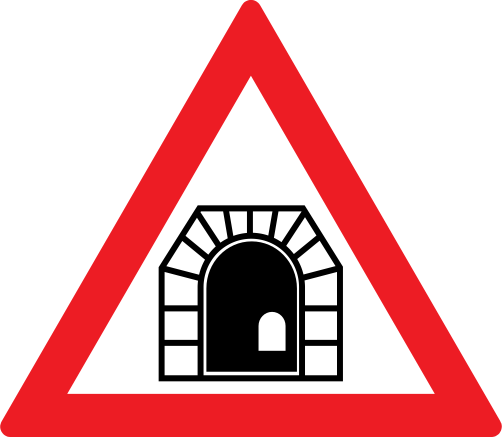
Tunnel
Warns of a tunnel. In the tunnel you switch on your dipped headlights, you do not stop and you do not stand (Article 114(7) and Article 141(7) of the Regulation). You must not overtake either; the exception is bicycles, electric scooters, mopeds, motorcycles without a sidecar and animal-drawn vehicles, if visibility is over 20 m and the road is at least 7 m wide (Article 120(1) letter d) of the Regulation).
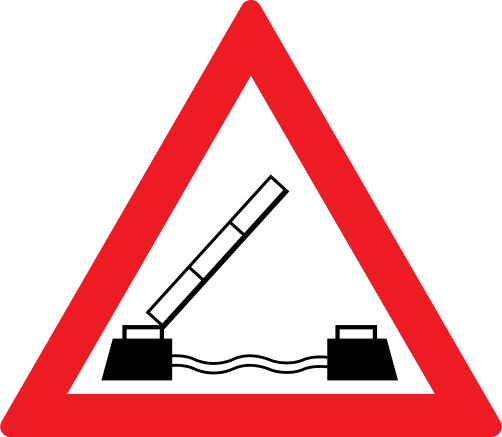
Movable bridge
Warns of a movable bridge. If the bridge is raised, you stop. On the bridge you must not stop, stand, make a U-turn or reverse and, as a rule, you must not overtake either (Article 120(1) letter d), Article 126 letter a), Article 128(1) letter a), Article 142 letter c) and Article 143 letter a) of the Regulation).
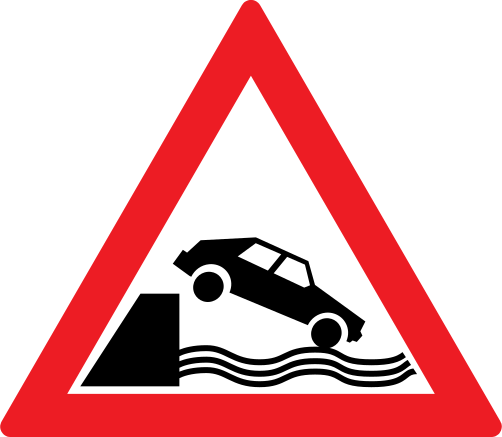
Road leading onto a quay or steep bank
Warns that, straight ahead, the road ends above a quay or a steep bank.
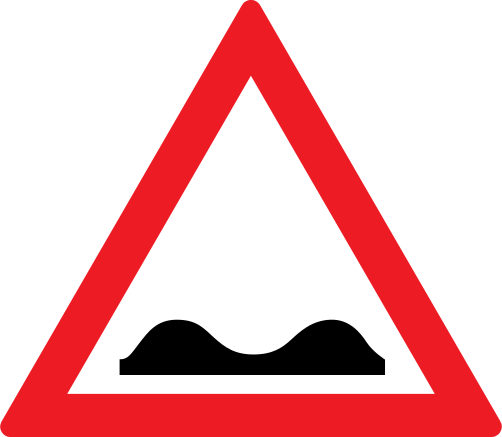
Uneven road
Warns of an uneven road. You drive at no more than 30 km/h in built-up areas and 50 km/h outside them (Article 123 letter f) of the Regulation). An additional panel may show the length of the section.
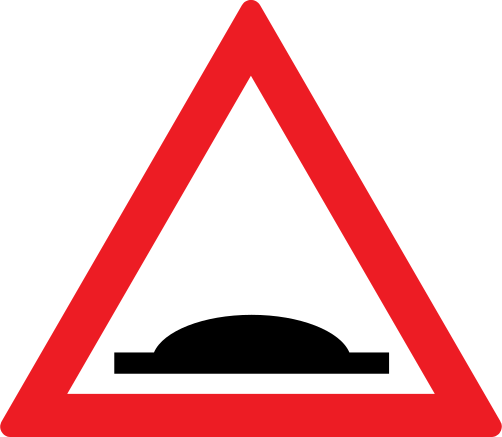
Hump for limiting speed
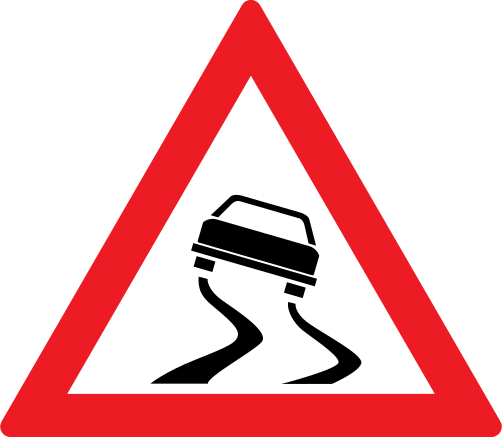
Slippery road
Warns of a section that may become slippery. You reduce speed, drive carefully, do not jerk the steering wheel and brake gently. On black ice, ice, packed snow, slippery mud or wet cobblestones, you drive at no more than 30 km/h in built-up areas and 50 km/h outside them (Article 123 letter e) of the Regulation).
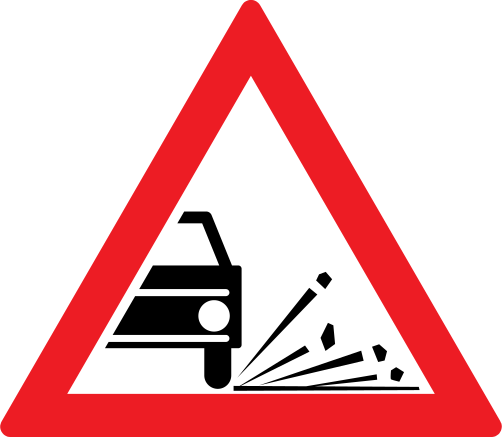
Loose chippings
Warns of a section where wheels may throw gravel towards other road users. You reduce speed and keep a greater distance from the vehicle in front. It may be accompanied by the sign ‘Motor vehicles prohibited from driving without keeping a gap of at least ... m between them’.
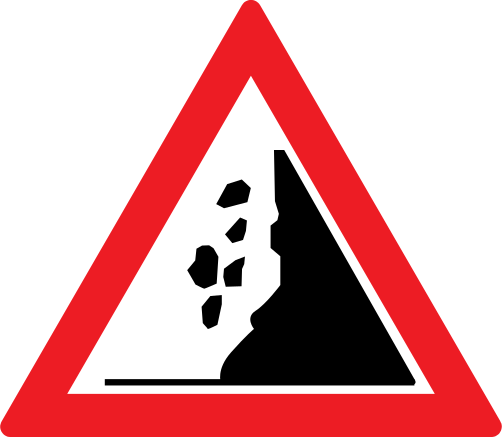
Falling rocks
Warns of a section with a risk of falling rocks. You reduce speed and drive carefully. An additional panel may show the length of the dangerous section.
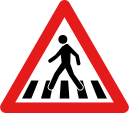
Pedestrian crossing ahead
Warns of a pedestrian crossing. You reduce speed and drive carefully. At the crossing you give way to pedestrians who have started crossing in your direction of travel, you do not overtake on the crossing and you do not stop on it or less than 25 m before or after it (Article 120(1) letter e), Article 135 letter h) and Article 142 letter e) of the Regulation).
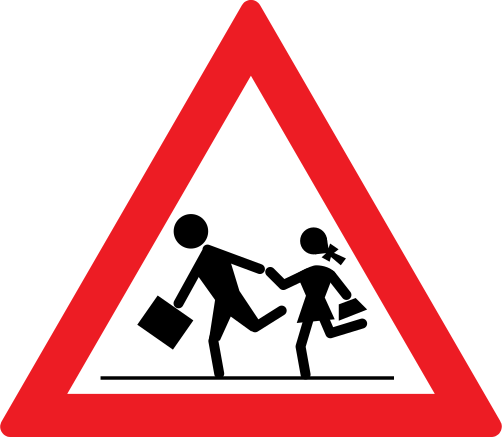
Children
You find it on sections frequented by children, usually near nurseries, schools and playgrounds. Between 7:00 and 22:00, within its zone of effect, you drive at no more than 30 km/h in built-up areas and 50 km/h outside them (Article 123 letter g) of the Regulation).
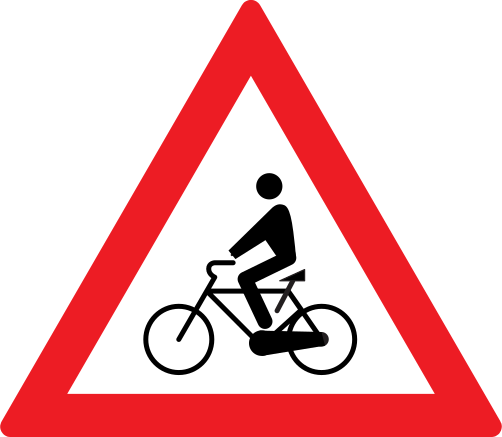
Cyclists
Warns of a place where the road crosses a cycle track. You reduce speed. When you turn and cross the track, you give way to those travelling on it (Article 135 letter g) of the Regulation).
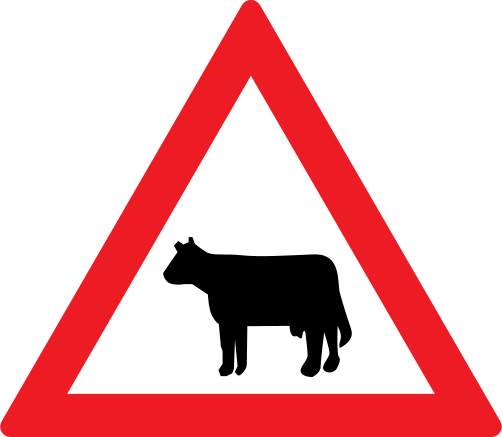
Animals
Warns of a section where animals may cross or be on the road. You reduce speed and drive carefully. When passing animals being led on the carriageway or on the verge, you drive at no more than 30 km/h in built-up areas and 50 km/h outside them (Article 123 letter d) of the Regulation).
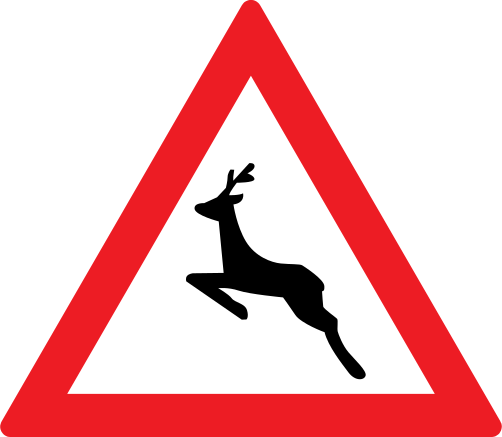
Animals
Warns of a section where animals may cross or be on the road. You reduce speed and drive carefully. When passing animals being led on the carriageway or on the verge, you drive at no more than 30 km/h in built-up areas and 50 km/h outside them (Article 123 letter d) of the Regulation).
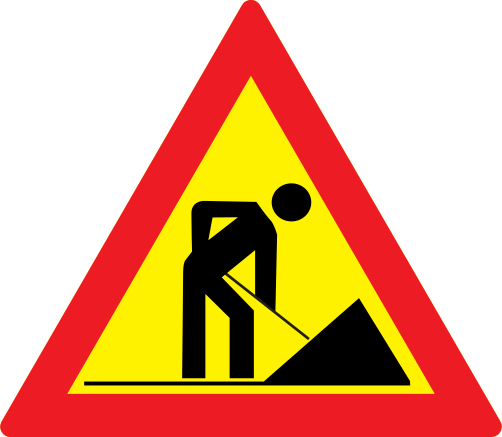
Roadworks
Warns of a section with roadworks. You reduce speed. The yellow background shows that the sign is temporary (Article 67 of the Regulation).
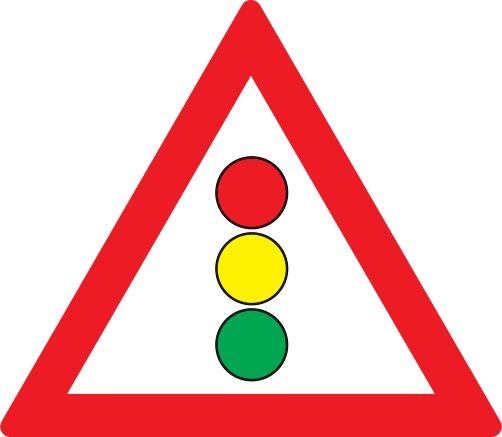
Traffic lights
Warns of traffic lights that might take you by surprise.
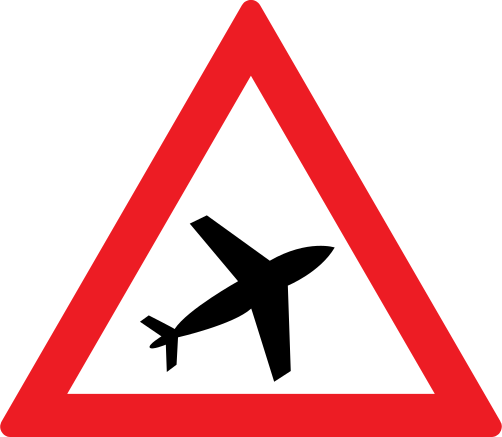
Airport
You find it on roads that pass under flight paths near airports. It warns you that you may be surprised by loud noise or by low-flying aircraft.
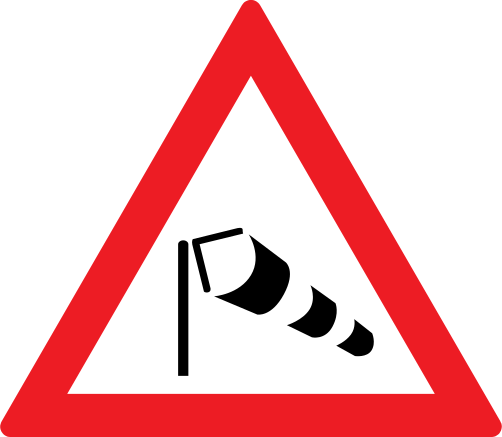
Crosswind
Warns of a place with strong crosswinds. Hold the steering wheel firmly, especially when you pass a large vehicle.
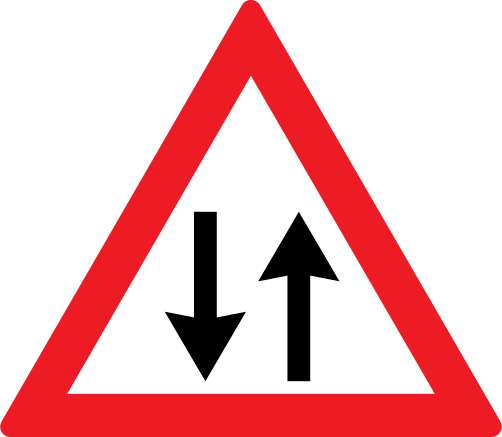
Two-way traffic
You find it at the end of a one-way road. It warns you that, on the next section, traffic flows in both directions.
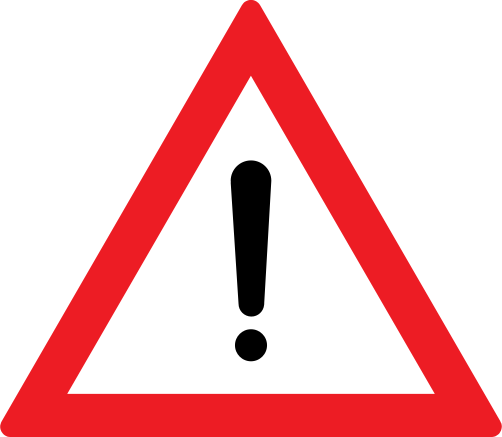
Other dangers
Warns of a dangerous place for which there is no specific sign. You reduce speed and drive carefully.
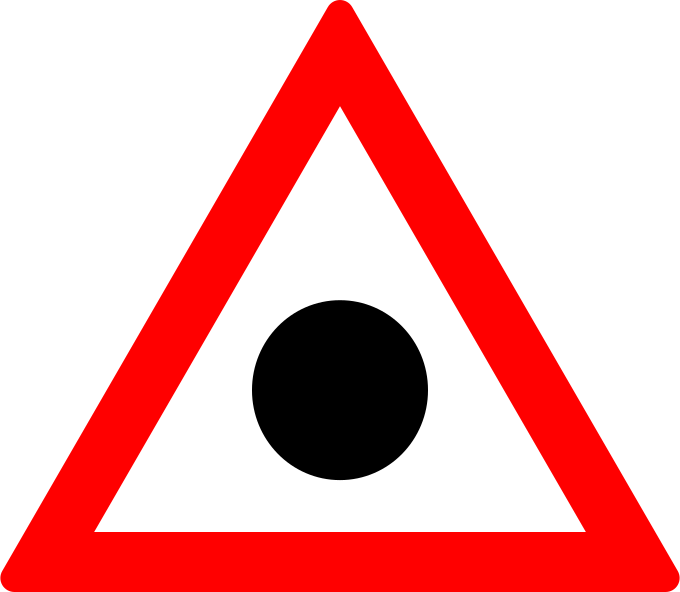
High accident risk area
Warns of a road section with a high risk of accidents. We recommend that you reduce speed, pay more attention and avoid risky manoeuvres.
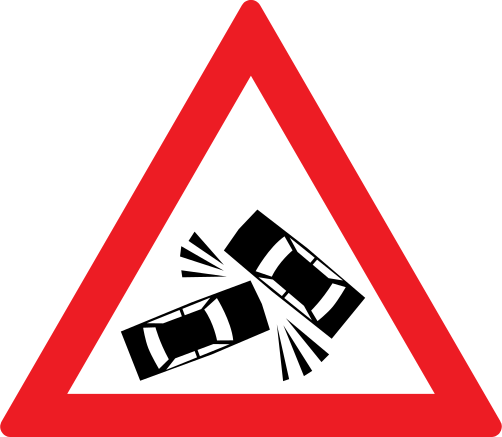
Accident
Warns of an accident on the road. Within its zone of effect you drive at no more than 30 km/h in built-up areas and 50 km/h outside them (Article 123 letter g) of the Regulation).
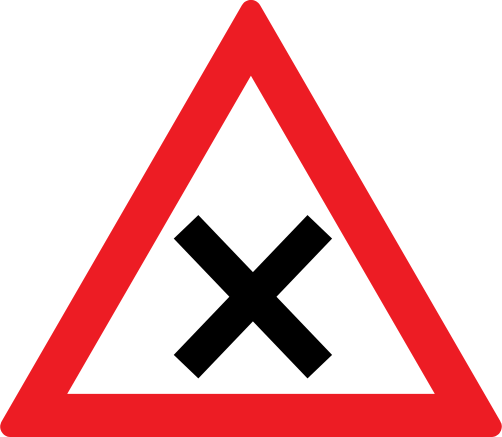
Crossroads
Warns of an uncontrolled junction, without traffic lights, a police officer or priority signs. There you apply the priority-to-the-right rule, taking into account the category of the roads, you drive at no more than 30 km/h in built-up areas and 50 km/h outside them and you do not overtake (Article 57(1) of OUG no. 195/2002; Article 120(1) letter a) and Article 123 letter a) of the Regulation).
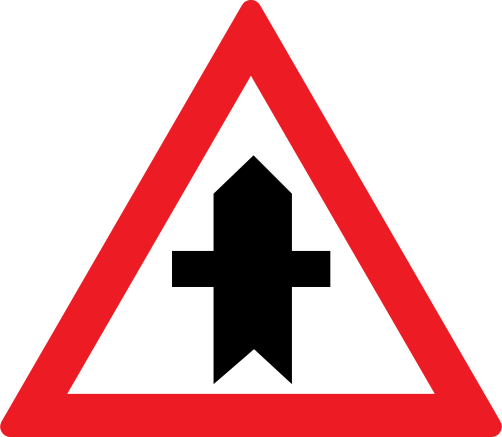
Junction with a road without priority
It confirms that you have priority over the side roads: those coming from them have ‘Give way’ or ‘Stop’ (Article 129(1) of the Regulation).
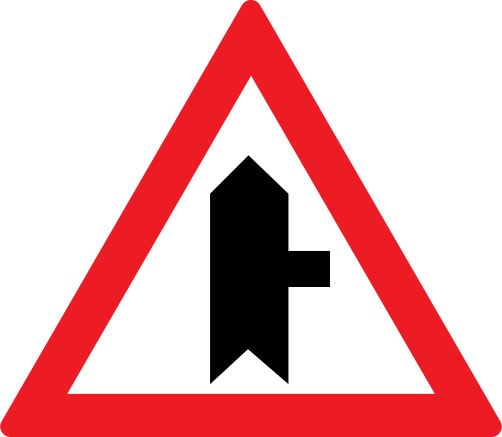
Junction with a road without priority
It confirms that you have priority over the side road: those coming from it have ‘Give way’ or ‘Stop’ (Article 129(1) of the Regulation).
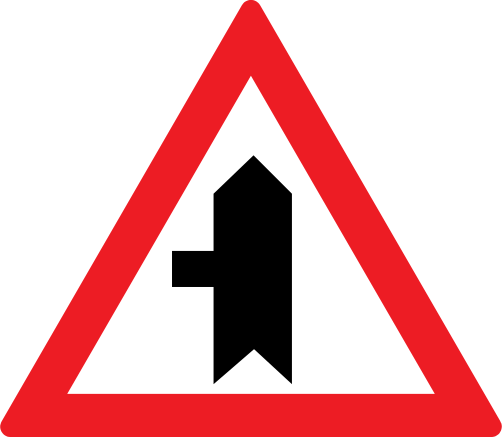
Junction with a road without priority
It confirms that you have priority over the side road: those coming from it have ‘Give way’ or ‘Stop’ (Article 129(1) of the Regulation).
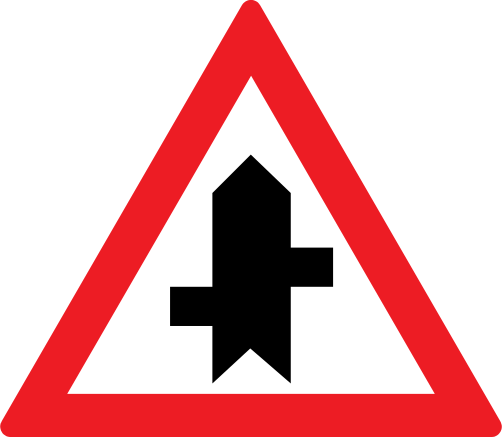
Junction with roads without priority, staggered
It confirms that you have priority over the staggered side roads: those coming from them have ‘Give way’ or ‘Stop’ (Article 129(1) of the Regulation).
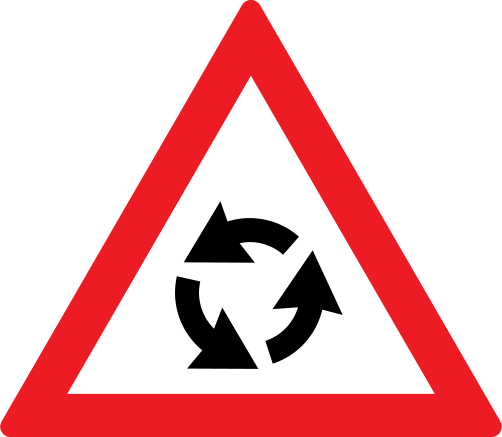
Roundabout ahead
Warns of a junction with a roundabout. You reduce speed. Vehicles already on the roundabout have priority over those entering it (Article 57(4) of OUG no. 195/2002).
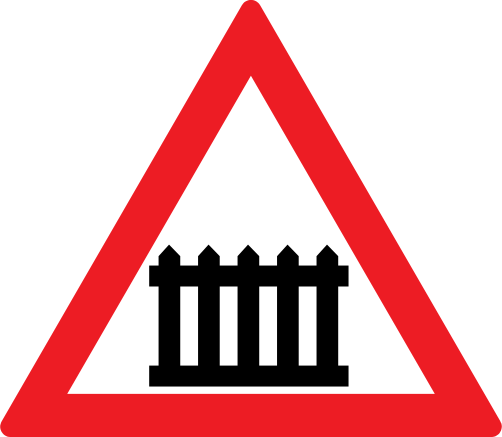
Level crossing with barriers or half barriers
Warns of a level crossing with barriers or half barriers. You reduce speed. You do not overtake on the crossing or less than 50 m before it, and you do not stop on it or less than 50 m before or after it (Article 120(1) letter f) and Article 142 letter b) of the Regulation). You stop when the barriers are down, being lowered or being raised, or when the red lights or audible signals are working (Article 138(1) of the Regulation).
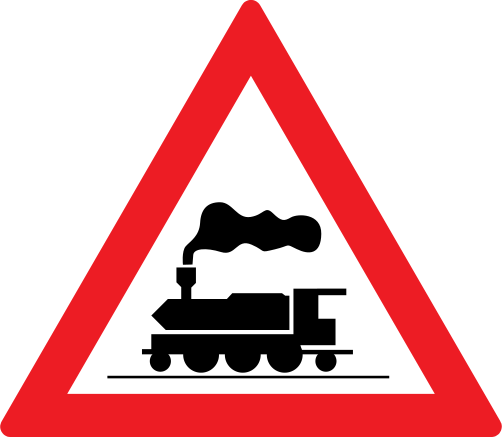
Level crossing without barriers
Warns of a level crossing without barriers. The sign itself does not oblige you to stop: you reduce speed and get ready. Stopping is compulsory at the cross placed right at the crossing, together with the ‘Stop’ sign (Article 69(1) and Article 138(1) letter c) of the Regulation).
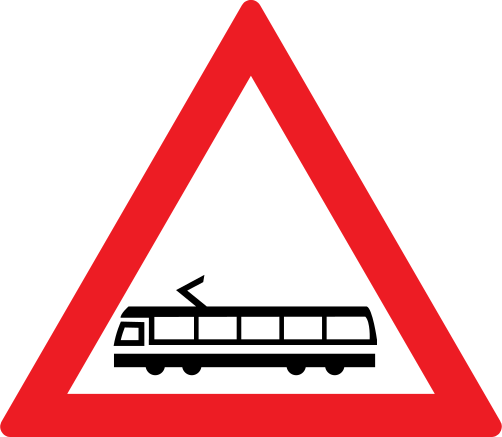
Level crossing with tram lines
Warns of a junction where trams may turn right or left. You reduce speed. At an uncontrolled junction, the tram has priority over you; it loses priority when it turns left or when the signs and signals in the area set a different rule (Article 59(1) of OUG no. 195/2002).
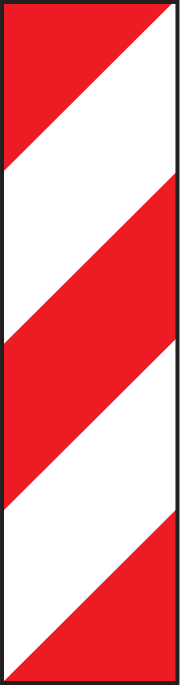
Direction marker showing that the obstacle is to be passed on the left
Warns you to pass the obstacle on the left.
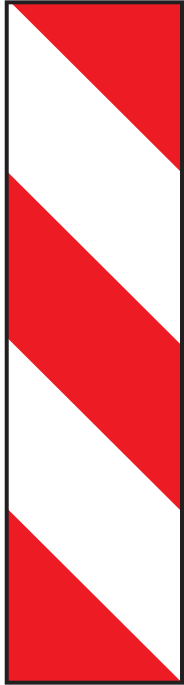
Direction marker showing that the obstacle is to be passed on the right
Warns you to pass the obstacle on the right.
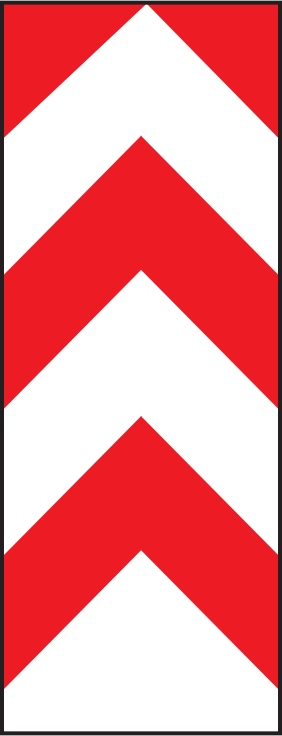
Two-way direction marker
Warns you that there are obstacles on both sides of the road and traffic passes through the middle.
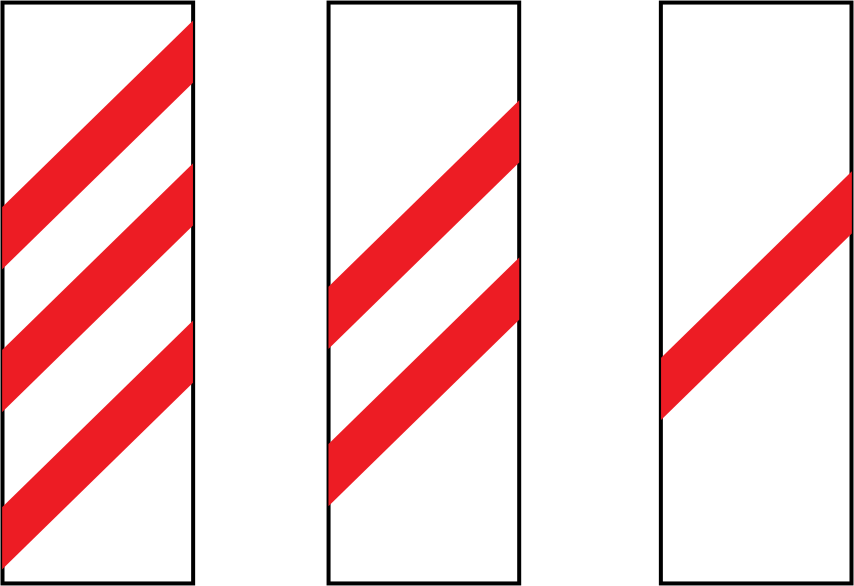
Additional panels for a level crossing
Panels placed before a level crossing: the first has three stripes, the second two and the last, closest to the railway, one. You reduce speed in good time.
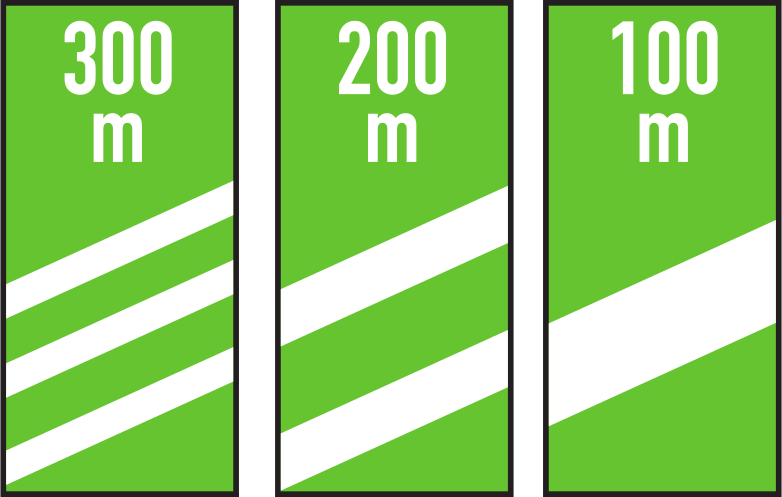
Additional panels at motorway interchanges
Panels with diagonal stripes telling you that you are approaching the next motorway interchange.

Single-track level crossing, without barriers
Placed right at the level crossing. You must stop, in order of arrival, at the point with the best view of the railway, without passing the sign, and make sure no train is coming (Article 138(1) letter c) and (2) of the Regulation).
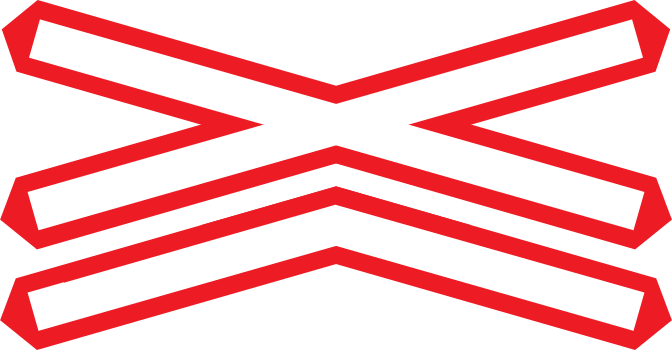
Double-track level crossing, without barriers
Placed right at the level crossing. You must stop, in order of arrival, at the point with the best view of the railway, without passing the sign, and make sure no train is coming (Article 138(1) letter c) and (2) of the Regulation).
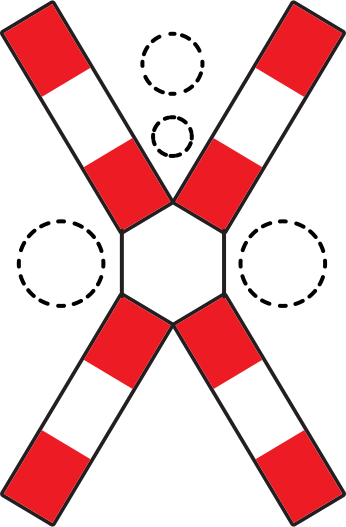
Single-track level crossing without barriers
Placed right at the level crossing. You must stop, in order of arrival, at the point with the best view of the railway, without passing the sign, and make sure no train is coming (Article 138(1) letter c) and (2) of the Regulation).
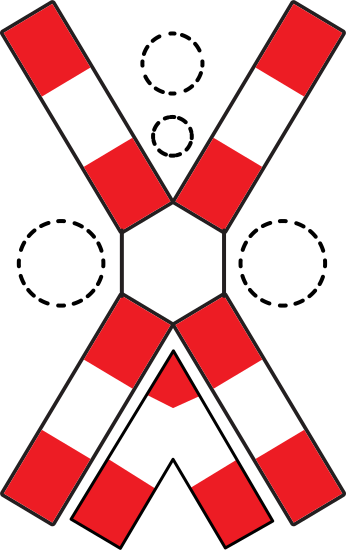
Double-track level crossing without barriers
Placed right at the level crossing. You must stop, in order of arrival, at the point with the best view of the railway, without passing the sign, and make sure no train is coming (Article 138(1) letter c) and (2) of the Regulation).
Sign drawings: Wikimedia Commons, by Gigillo83 (CC BY-SA 4.0), Alex:D (CC BY-SA 3.0).
Updated on 3 November 2026, in accordance with OUG no. 195/2002 and the Regulation approved by HG no. 1.391/2006, as in force.